
You know that little lock icon in your browser’s address bar? The one that makes you feel safe when you’re checking your bank account or sending an email? That’s cryptography at work. It’s the digital lock and key for everything online. And here’s the deal: a new kind of key is coming. A quantum key.
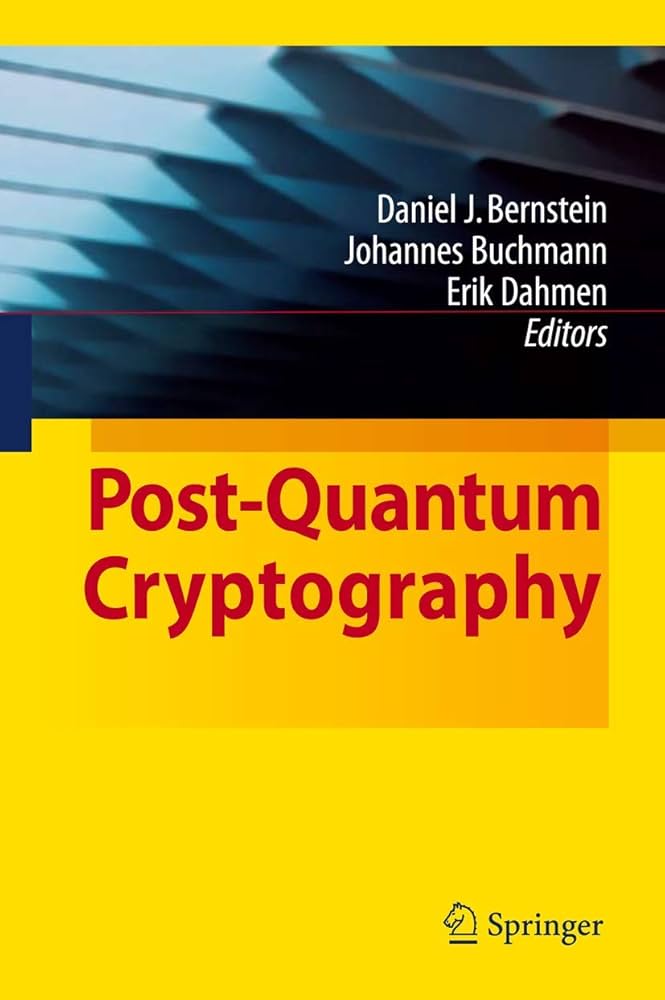
The conversation around quantum computing often sounds like sci-fi—full of promises about solving impossible problems. But for cybersecurity, it poses a very real, if future, threat. A large-scale quantum computer could, theoretically, break the fundamental encryption that protects our data today. That’s where post-quantum cryptography (PQC) comes in. It’s the next generation of digital locks, designed to be secure against both classical and quantum attacks.
Honestly, you don’t need a degree in physics. You just need a practical understanding of what’s shifting and, more importantly, how to prepare without panic. Let’s dive in.
Why Should You Care About a “Future” Threat?
Well, it’s about the data you have right now. A concept called “harvest now, decrypt later” is the real pain point. A sophisticated attacker could be intercepting and storing your encrypted data today—sensitive contracts, customer information, private communications—with the full intention of decrypting it years from now when a quantum computer is powerful enough. The threat isn’t necessarily imminent, but the vulnerability of today’s data might already be.
For small and medium-sized businesses (SMBs), this isn’t just an IT problem. It’s a risk to intellectual property, financial data, and customer trust. The transition to post-quantum security isn’t a flip you switch overnight; it’s a migration. And migrations take time. Starting to think about it now is the smart, proactive move.
Decoding the Jargon: PQC in Plain English
Think of current encryption like a massively complex maze. A classical computer is a single person trying to solve it—it takes a long, long time. A quantum computer, with its unique properties, is like having a thousand people exploring every path simultaneously. It finds the exit (or breaks the code) exponentially faster.
Post-quantum cryptography, then, builds a different kind of maze. One that’s even more complex and confusing, even for those thousand explorers. These are new mathematical problems that are believed to be hard for both classical and quantum machines to solve. The National Institute of Standards and Technology (NIST) has been running a global competition to standardize these new algorithms, and the first official standards are arriving. That’s the signal: the foundation for the next era of internet security is being poured.
What’s Actually at Risk for SMBs and Individuals?
Pretty much anything protected by today’s public-key cryptography. Which is… a lot.
- Website Security (HTTPS/SSL): The bedrock of e-commerce and secure browsing.
- Digital Signatures: Used for signing documents, software updates, and legal contracts.
- Private Messages & Email: End-to-end encrypted chats and secured email protocols.
- Virtual Private Networks (VPNs): The tunnel that keeps your remote work secure.
- Cryptocurrency Wallets: The security of blockchain assets relies on these keys.
A Practical Preparation Roadmap (No Doomsday Prepping Required)
Okay, so what do you do? You don’t need to become a cryptographer. Preparation is about awareness and strategic upgrades. Here’s a breakdown.
For the Everyday Internet User
Your role is largely about vigilance and letting the experts do the heavy lifting. But you’re not passive.
- Prioritize Software Updates: This will be your number one action. When your browser, operating system, or apps push updates, they will eventually include PQC standards. Installing them promptly is how you get the new locks.
- Use Password Managers & Strong, Unique Passwords: Quantum computers won’t magically crack strong passwords directly, but they undermine other protections. A password manager creates a unique, complex key for every site, limiting damage if one is compromised.
- Adopt Multi-Factor Authentication (MFA) Everywhere: Seriously. Not just SMS codes, but use an authenticator app or a security key. MFA adds a layer that encryption alone doesn’t provide—it’s a separate wall.
- Stay Informed on Your Tools: Follow the security blogs of the services you rely on (like your bank, cloud storage, or email provider). They’ll communicate their post-quantum readiness plans.
For Small Business Owners & IT Managers
Your preparation is more hands-on. It’s about inventory and future-proofing.
| Action Item | Why It Matters | Short-Term Step |
| Crypto-Agility Audit | Can your systems easily swap out cryptographic algorithms? Or are they hard-coded and rigid? | Talk to your software vendors. Ask about their PQC roadmap and how upgrades will be handled. |
| Data Classification | Not all data needs the same level of long-term protection. Prioritize what’s truly critical. | Identify “crown jewel” data: intellectual property, long-term legal documents, sensitive customer info. |
| Inventory Your Encryption | Where is encryption used? (Data at rest, in transit, for authentication?). You can’t protect what you don’t know. | Map out where TLS, VPNs, and digital signatures are used in your workflows. |
| Supplier & Vendor Vetting | Your security is only as strong as your weakest link—often a third-party service. | Add “post-quantum cryptography preparedness” to your vendor security questionnaires. |
Look, the goal isn’t to rip and replace everything tomorrow. It’s to avoid being caught flat-footed. When your web host, your cloud provider, or your email security service announces PQC support, you want to be ready to enable it smoothly.
The Human Side of a Quantum Transition
In fact, the biggest challenge might not be the tech itself—it’s the logistics. The coordination. Imagine having to change the physical locks on every door in a sprawling city, all at once, without ever leaving a door unlocked. That’s the scale of the internet’s upgrade. It has to be gradual, tested, and backward-compatible for a long while.
For you and your business, this means patience alongside proactivity. There will be a long period of “hybrid” security, where systems use both old and new algorithms together. It might feel messy. Because it will be. That’s okay.
Wrapping Up: Your Mindset Shift
So, here’s the thought to leave you with. Preparing for post-quantum cryptography isn’t about fearing a quantum apocalypse. It’s about recognizing that internet security is a living, evolving thing—a continuous process, not a one-time purchase. It’s about building resilience.
By taking the steps we’ve talked about, you’re not just preparing for a speculative future threat. You’re tightening your overall security hygiene today. You’re making yourself a harder target for all kinds of threats. And that, honestly, is just good sense. The quantum era is coming, sure. But with a bit of foresight, it doesn’t have to catch you off guard.



More Stories
The Rise of Spatial Computing: Reshaping How We Work and Create
The Rise of Ambient Computing and Invisible Interfaces: When Technology Fades Into the Background
Integrating Digital Twin Technology for Small-Scale Manufacturing and Logistics