
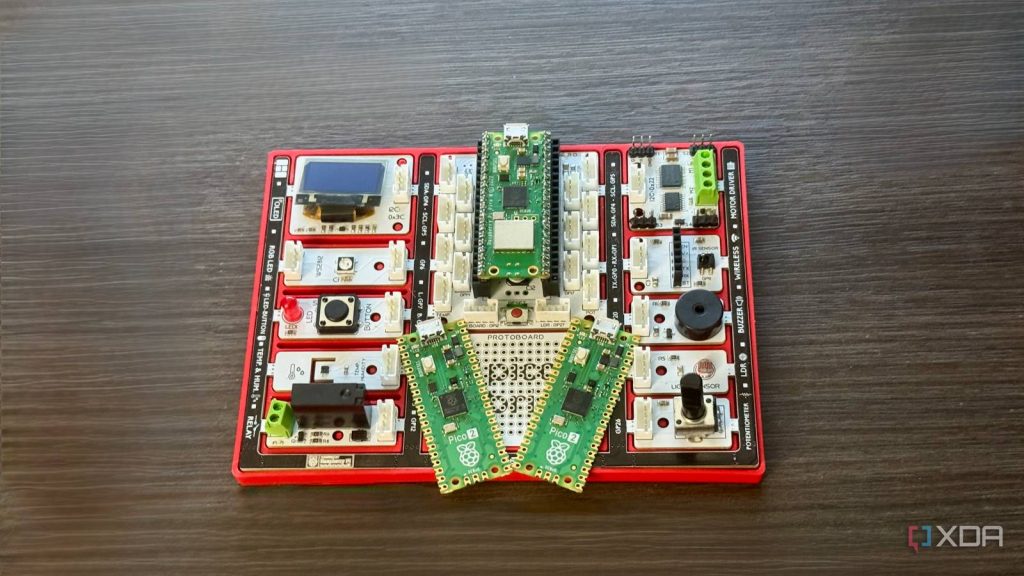
Let’s be honest—when you hear “open-source,” your mind probably jumps to software. Linux, Firefox, that kind of thing. But there’s a whole other world out there, a tangible one you can hold in your hand. That’s the world of open-source hardware (OSH). It’s about blueprints, circuit diagrams, and physical components that anyone can study, modify, and build upon. And the beating heart of this movement? Development boards. These little platforms are the launchpad for everything from smart home gadgets to… well, honestly, to things we haven’t even imagined yet.
This guide is your map. We’ll break down what open-source hardware really means, tour the iconic boards that started it all, and peek at where it’s all headed. No fluff, just the good stuff.
What Exactly Is Open-Source Hardware, Anyway?
Think of it like a recipe. A proprietary hardware recipe is a secret, locked in a vault. An open-source hardware recipe is published for everyone. You get the full ingredient list (bill of materials), the step-by-step instructions (schematics and layout files), and the cooking techniques (firmware, software). You’re free to make the dish, tweak the spices, and even sell your version—as long as you credit the original chef and share your changes under the same open terms.
It’s a philosophy of collaboration over competition, in many ways. The core idea is that by sharing knowledge openly, innovation accelerates. A problem solved in a garage in Berlin can help a student in Tokyo. That’s powerful.
The Unmissable Benefits – Why This Matters
Sure, it sounds nice, but what’s the real draw? For makers, educators, and startups, the advantages are concrete.
- Learning & Education: It’s the ultimate peek under the hood. Instead of treating a device as a magic black box, you can see exactly how it works. This is, in fact, invaluable for students and hobbyists.
- Rapid Prototyping: You don’t start from zero. You start from a proven foundation. This cuts development time and cost dramatically.
- Community & Support: Hit a snag? With a popular open-source hardware project, there’s a global community forum or Discord channel where someone has likely faced—and solved—your exact issue.
- Vendor Independence: If one manufacturer stops making a critical component, the open design lets you find or create an alternative. You’re not locked in.
The Titans: Development Boards That Changed the Game
Okay, let’s talk about the stars of the show. These boards are the blank canvases. Here’s a quick rundown of the heavy hitters.
| Board | Core Philosophy | Ideal For |
| Arduino Uno | Simplicity & accessibility above all. | Beginners, artists, quick physical computing projects. |
| Raspberry Pi | A full, affordable Linux computer on a tiny board. | Media centers, home servers, robotics, learning to code. |
| ESP32/ESP8266 | Powerful, dirt-cheap wireless connectivity. | IoT projects, WiFi/Bluetooth sensors, smart home devices. |
| BeagleBone | Industrial-grade performance with real-time I/O. | Advanced prototyping, embedded Linux applications. |
Arduino: The Gateway Drug
It’s almost impossible to overstate Arduino’s impact. It took the intimidating world of microcontrollers and made it approachable. With a simple IDE and a focus on readable code (they call it “sketches,” which is telling), it demystified electronics for millions. The ecosystem of “shields” (add-on boards) is massive. Need GPS, motor control, or an Ethernet connection? There’s a shield for that. It’s the perfect starting point.
Raspberry Pi: The Swiss Army Knife
If Arduino is a simple, reliable tool, the Raspberry Pi is a whole workshop. It runs a full operating system. You can browse the web on it, use it as a retro gaming console, or automate your entire house. The GPIO pins still let it talk to sensors and motors, but its real power is in being a standalone computer. The project ideas here are almost limitless.
The ESP Series: The Wireless Workhorse
Here’s the deal: if your project needs to connect to the internet or talk to a phone on a tight budget, you’re probably using an ESP32 or its predecessor, the ESP8266. These boards from Espressif are ridiculously capable for their price. They’ve fueled the DIY smart home explosion—think custom temperature sensors that report to your phone, or WiFi-enabled garden controllers. They’re the quiet champions of connectivity.
Navigating the Open-Source Hardware Workflow
So you’ve got a board. Now what? The journey from idea to finished project has a rhythm to it. It’s not always linear—you’ll loop back, stumble, and iterate. That’s part of the fun.
1. Ideation & Planning: Start simple. “I want a light that turns on when my cat uses the litter box.” No, seriously. Define what you want to achieve before you touch a single wire.
2. Choosing Your Platform: Match the board to the task. Does it need complex logic and a screen? A Pi might be best. Is it a simple sensor reading and sending data wirelessly? An ESP32 is your friend. Just a button and a motor? Arduino.
3. Prototyping & The “Breadboard Phase”: This is where you build a temporary, messy version. Wires everywhere, components loosely connected. It’s supposed to look chaotic. It’s for testing the logic, the code, the basic functionality. Embrace the mess.
4. Designing & Fabricating: Once the prototype works, you move to a permanent form. This might mean designing a custom PCB (printed circuit board) using open-source tools like KiCad. You can then have these fabbed affordably online. This step turns your jumble of wires into a sleek, reliable device.
5. Documenting and Sharing: This is the open-source mandate. You know, the “give back” part. Share your schematics, your code, your build photos. Write a tutorial. This not only helps others but solidifies your own understanding. It’s how the ecosystem grows.
Current Trends and The Road Ahead
The landscape isn’t static. It’s buzzing. Right now, we’re seeing a huge push towards AI at the edge—tiny, low-power boards capable of running machine learning models for image or audio recognition. Think a bird feeder that identifies species, or a security camera that only alerts you for people, not passing cars.
RISC-V is another seismic shift. It’s an open-source instruction set architecture—basically, an open alternative to the proprietary cores from ARM or Intel. This could lead to a new wave of truly open-source chips, which is… well, it’s a big deal for long-term innovation and control.
And let’s not forget sustainability. There’s a growing focus on repairability and right-to-repair. Open-source hardware inherently supports this. If you have the schematics, you can fix it. You’re not forced to throw a device away because one proprietary chip failed.
Wrapping Up: It’s About More Than Just Boards
At the end of the day, open-source hardware is a testament to a simple, powerful idea: we build further when we build together. Those development boards—the Arduinos, the Pis, the ESPs—they’re more than just pieces of silicon and fiberglass. They’re invitations. They’re tools for education, for innovation, and for reclaiming a bit of understanding and control over the increasingly opaque technological world we live in.
The barrier to entry has never been lower. The community has never been larger. So what’s stopping you? Grab a board, start with a blinking LED (everyone does), and see where the path takes you. The next world-changing project might just begin on your workbench.


More Stories
Sustainable E-Waste Recycling Processes for Rare Earth Metals
E-waste upcycling techniques for obsolete computer hardware
Hardware Security Keys for Passwordless Authentication: The Key You Can’t Lose